Industries & Applications
Contact Us
First Deliveries — Q2 2028

Your green hydrogen
supplier for the
Cali-Baja region.

Certified Product
Produced in Baja California
Delivered in Southern California

Green Hydrogen Baja will supply compressed green hydrogen — produced from renewable energy in Baja California and delivered directly to your facility in Southern California.

Register Your Interest
About the molecule

Hydrogen — the simplest element, the most powerful fuel.

Hydrogen (H2) is a diatomic molecule — two hydrogen atoms bonded together — and the most abundant element in the universe. As a gas it is colorless, odorless, and roughly 14 times lighter than air, which is why it disperses upward instantly when released rather than pooling at ground level like heavier fuels. What makes it compelling as an energy carrier is its gravimetric energy density: hydrogen stores approximately 2.5 times more energy per kilogram than natural gas, and when it combusts or reacts in a fuel cell, the only byproduct is water vapor — no CO2, no particulates, no nitrogen oxides.

Despite its abundance in the cosmos, molecular hydrogen does not occur freely on Earth in useful quantities — it must be produced. Today most industrial hydrogen is extracted from natural gas, which releases CO2 in the process. Green hydrogen is different: it is produced by splitting water (H2O) through electrolysis powered entirely by renewable electricity — wind, solar, or both. The result is chemically identical to conventional hydrogen, but its carbon footprint from production to end use is effectively zero. That is the hydrogen Green Hydrogen Baja will produce.

Compressed green hydrogen. One product. Industrial grade.

Green Hydrogen Baja will produce H2 at Grade 5.0 purity in La Rumorosa, Baja California — powered entirely by wind and solar energy, backed by a Battery Energy Storage System (BESS), with zero carbon emissions — and deliver it directly to your facility in Southern California.
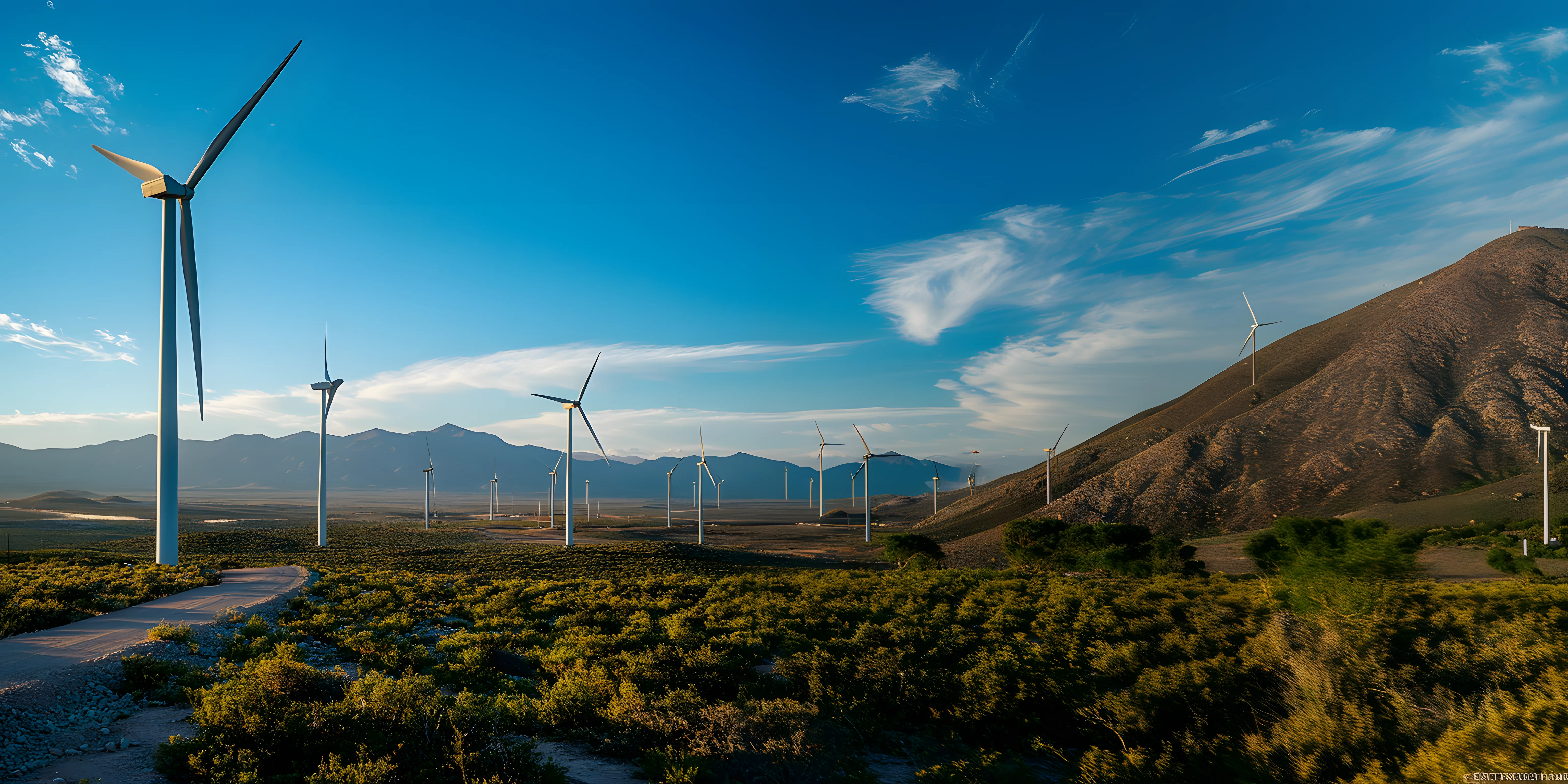
Wind turbines at La Rumorosa, Baja California — the renewable energy source powering Green Hydrogen Baja's electrolysis process
Wind turbines at La Rumorosa, Baja California — the renewable energy source that powers our electrolysis process and makes our hydrogen truly green.
Purity

99.999% — Grade 5.0 Ultra High Purity. Maximum impurities: O₂ < 5 ppm, H₂O < 5 ppm. Industry classification: UHP Grade 5.0.

Certification

All hydrogen supplied by Green Hydrogen Baja will carry official certification confirming its renewable origin and its classification as green hydrogen, in compliance with ISO 14687 and applicable international green hydrogen standards.

Delivery

Compressed gas via Class 8 Jumbo Tube Trailers (53 ft / 1,082 kg per trailer · 275 bar / 4,000 psi · high-pressure composite) — the same delivery format used by industrial gas suppliers across North America. Hydrogen is transported at high pressure in compressed gas form and transferred at your facility using standard industrial protocols. Delivery configuration is adaptable to your infrastructure needs. Deliveries are scheduled and coordinated directly with your operations team. Cross-border via Otay Mesa Port of Entry.

Shipping classification

D.O.T. Name: Hydrogen, compressed  ·  UN1049  ·  Hazard Class 2.1 — Flammable Gas  ·  CAS 1333-74-0
Download Product Sheet PDF
H2 Supply & Delivery

One supplier. One contact. Zero infrastructure investment on your end.

GHB will handle the full chain — production, cross-border logistics, scheduled delivery, and on-site transfer. Your operations team will receive hydrogen at your facility, on a schedule that works for you.

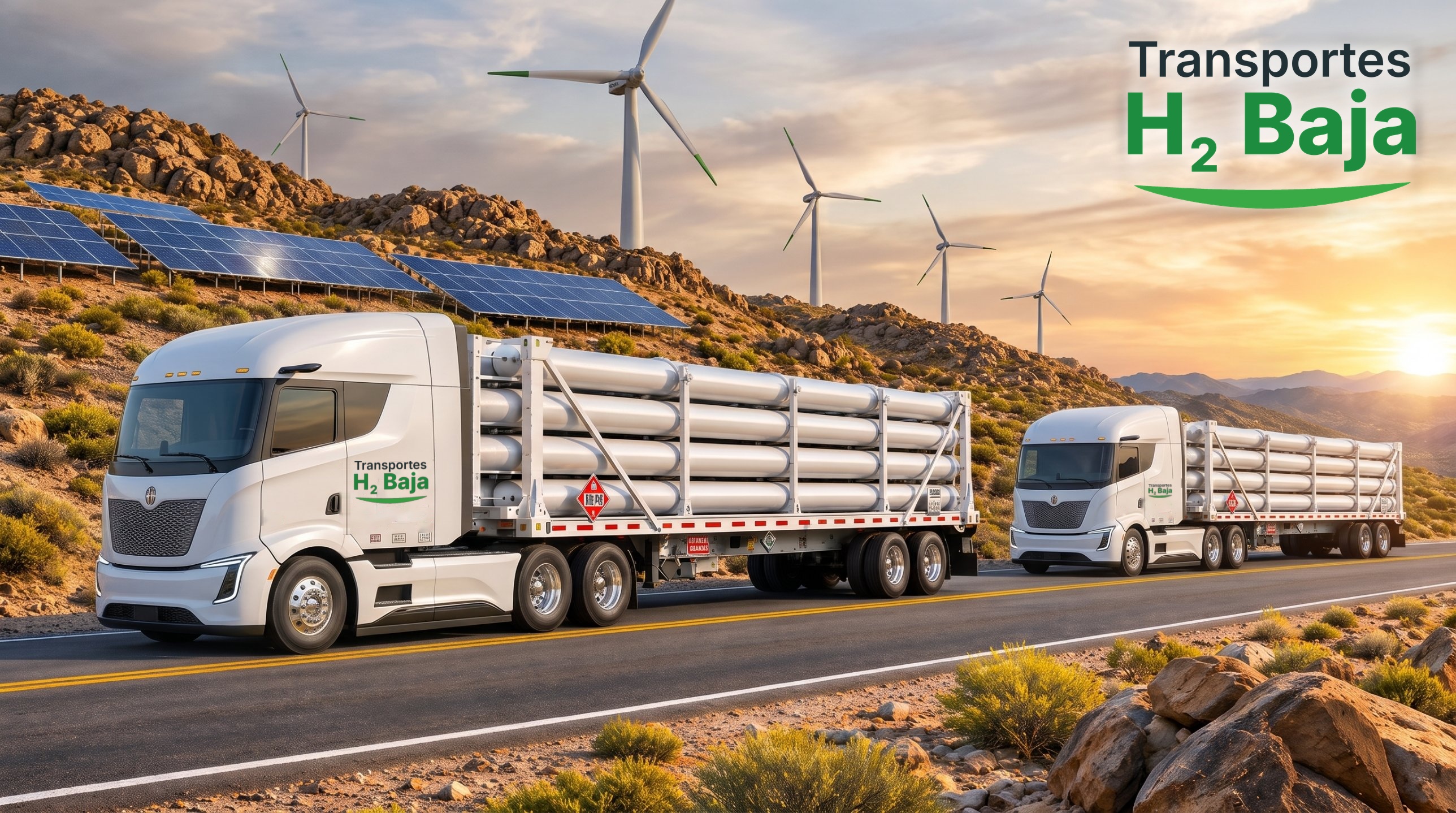
Transportes H₂ Baja — tube trailers carrying green hydrogen to Southern California
Transportes H₂ Baja — Class 8 tube trailer convoy transporting compressed green hydrogen from La Rumorosa, Baja California to Southern California via the Otay Mesa Port of Entry.
H₂
Bulk Supply

Contracted supply in agreed volumes, priced per kilogram. We will work directly with your procurement team to structure an agreement that fits your consumption and your growth plan.

Your supply. Your volumes. Your terms.

Offtake agreements with fixed pricing per kg, defined monthly volumes, and delivery cadence — structured to give your operations team a predictable, bankable supply.

H₂
Scheduled Delivery

Delivery frequency, timing, and coordination are confirmed directly with your operations team. No intermediaries. No surprises. The schedule works around your facility, not the other way around.

Planned around your operations.

Agreed delivery windows confirmed in advance — weekly, bi-weekly, or monthly — so your team can plan around arrivals without last-minute coordination or unplanned gaps.

H₂
On-Site Transfer

Green hydrogen is transported in Class 8 Jumbo Tube Trailers (Type IV, 53 ft) at 275 bar (4,000 psi) — up to 1,082 kg per load. The tube trailers used to transport our hydrogen are manufactured in the United States and are U.S. DOT approved for compressed hydrogen transport (Special Permit #20425). Our driver handles the connection and transfer at your facility using standard industrial protocols.

Tube Trailers — U.S. DOT Approved · Special Permit #20425
Configured to your facility.

If your operation requires pressure adjustment — a booster compressor to step up for dispensing, or a cascade system — that is evaluated case by case and coordinated with your team. Every delivery is matched to your infrastructure.

Cross-Border Logistics

All cross-border movement — permits, compliance, and customs — is handled by Green Hydrogen Baja. Entry via Otay Mesa Port of Entry, the primary commercial freight corridor for the Cali-Baja region.

U.S. DOT Compliant
Mexican SCT Compliant
Fully compliant. Fully managed. On your side of the border.

Transport documentation, customs clearance, and regulatory compliance under U.S. DOT and Mexican SCT rules are handled entirely by Green Hydrogen Baja. By the time the trailer arrives at your facility, the border is already behind it.

Every delivery. Every time.

Green hydrogen is a compressed, flammable gas handled under federal hazardous materials regulations — and GHB will operate to that standard from day one. Every driver will hold a Class A CDL with Hazmat and Tanker endorsements. Our team will operate under protocols aligned with NFPA 2 and CGA best practices, with ongoing certification in compressed gas handling, emergency response, and on-site transfer procedures.

From our first delivery, GHB will track incident-free days, near-miss reporting, and continuous improvement metrics.

"We are building Green Hydrogen Baja to operate the way a world-class industrial gas company operates: with certified people, proven procedures, and a culture where safety and professionalism are not policies on a wall — they are how we show up, every delivery, every time."

— Miguel A. Vildosola, Co-Founder & CEO, Green Hydrogen Baja
H₂ Dispensing Station

Otay Mesa Hydrogen Fueling Station

Green Hydrogen Baja is developing a permanent, high-capacity H₂ fueling hub at Otay Mesa, California — on the most critical heavy-duty logistics corridor in the US–Mexico border region. This is not a pilot or a demonstration. Permanent, brick-and-mortar infrastructure engineered for Class 8 heavy-duty trucks, supplied with 100% green hydrogen sourced directly from the La Rumorosa production facility in Baja California.

To learn more about this investment opportunity, visit us at:   H₂ Station Investment Opportunity →

Why a hydrogen dispenser at Otay Mesa

Hydrogen fuel cell trucks are commercially available today. The fleets operating in the Cali-Baja H₂ Corridor — drayage operators, cross-border logistics companies, regional freight carriers — are already under pressure to transition to zero-emission. The trucks exist. The economics are improving. What is missing is a fueling point where the trucks actually operate.

Fleet operators
A permanent fueling point at the border enables hydrogen-powered drayage trucks to run the LA–Tijuana corridor without range anxiety. One station unlocks the entire route.
Maquiladoras & cross-border industry
Manufacturing operations in Tijuana moving goods across the border daily can decarbonize their last-mile fleet without changing their routes or schedules.
The Otay Mesa & Chula Vista region
A clean fuel infrastructure point at the border reduces diesel emissions in one of Southern California's most traffic-dense freight corridors — directly improving air quality for the communities along it.
The hydrogen ecosystem
Every station that opens makes the next one easier to justify. GHB's Otay Mesa station is designed as the anchor point of a Cali-Baja H₂ Corridor — the first infrastructure that makes the broader network viable.
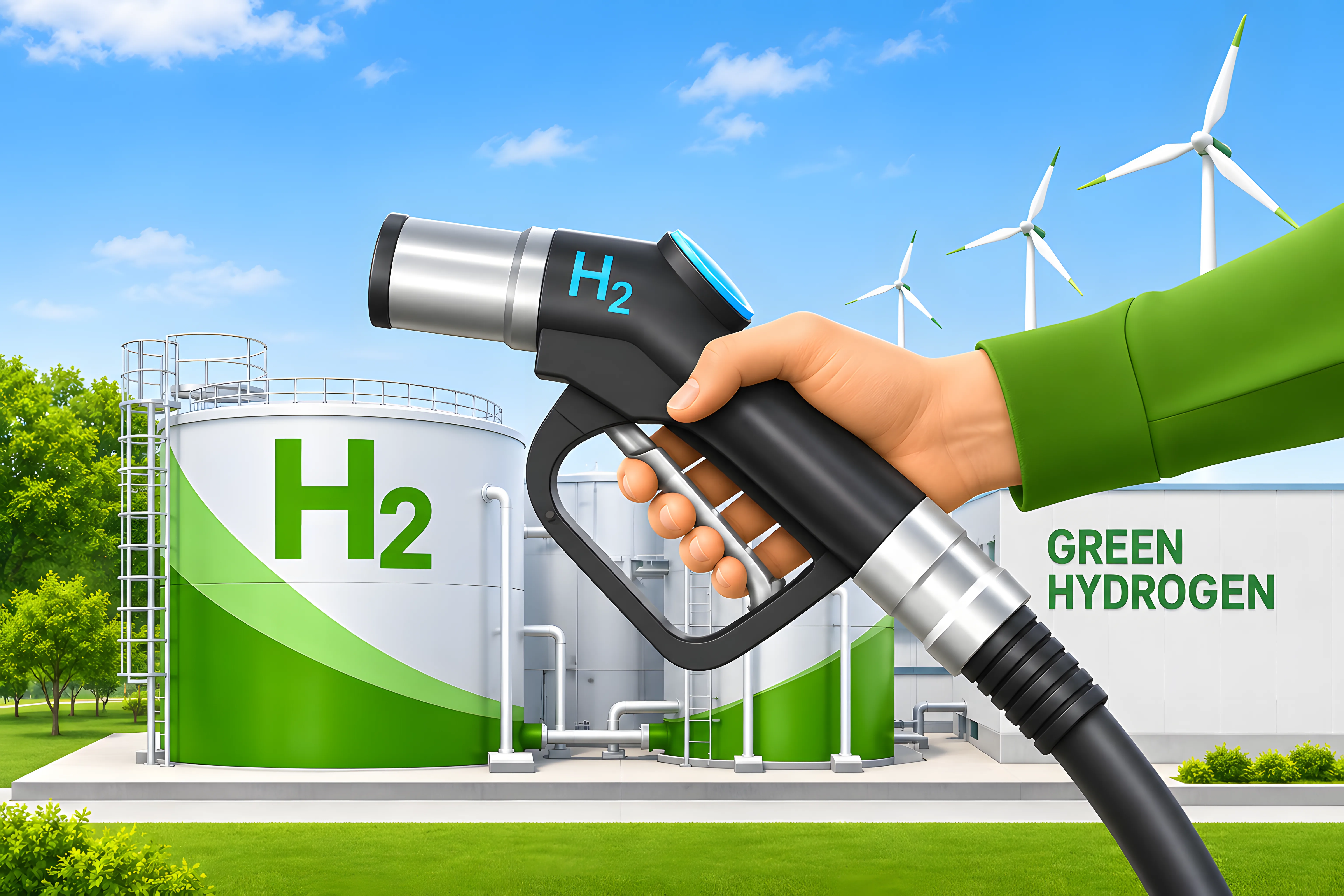
Green hydrogen fueling nozzle connecting to a heavy-duty hydrogen truck at an H₂ dispensing station
Concept illustration — High-pressure H₂ fueling nozzle. GHB's station will dispense green hydrogen at 350 bar (H35) for buses and 700 bar (H70) for Class 8 trucks.
What the station will include
✓Permanent high-capacity station — 6,000 kg/day for Class 8 trucks & buses
✓Dual-protocol dispensing — H35 (350 bar) for buses & H70 (700 bar) for trucks
✓700-bar multi-stage compression with −40°C pre-cooling for rapid back-to-back fills
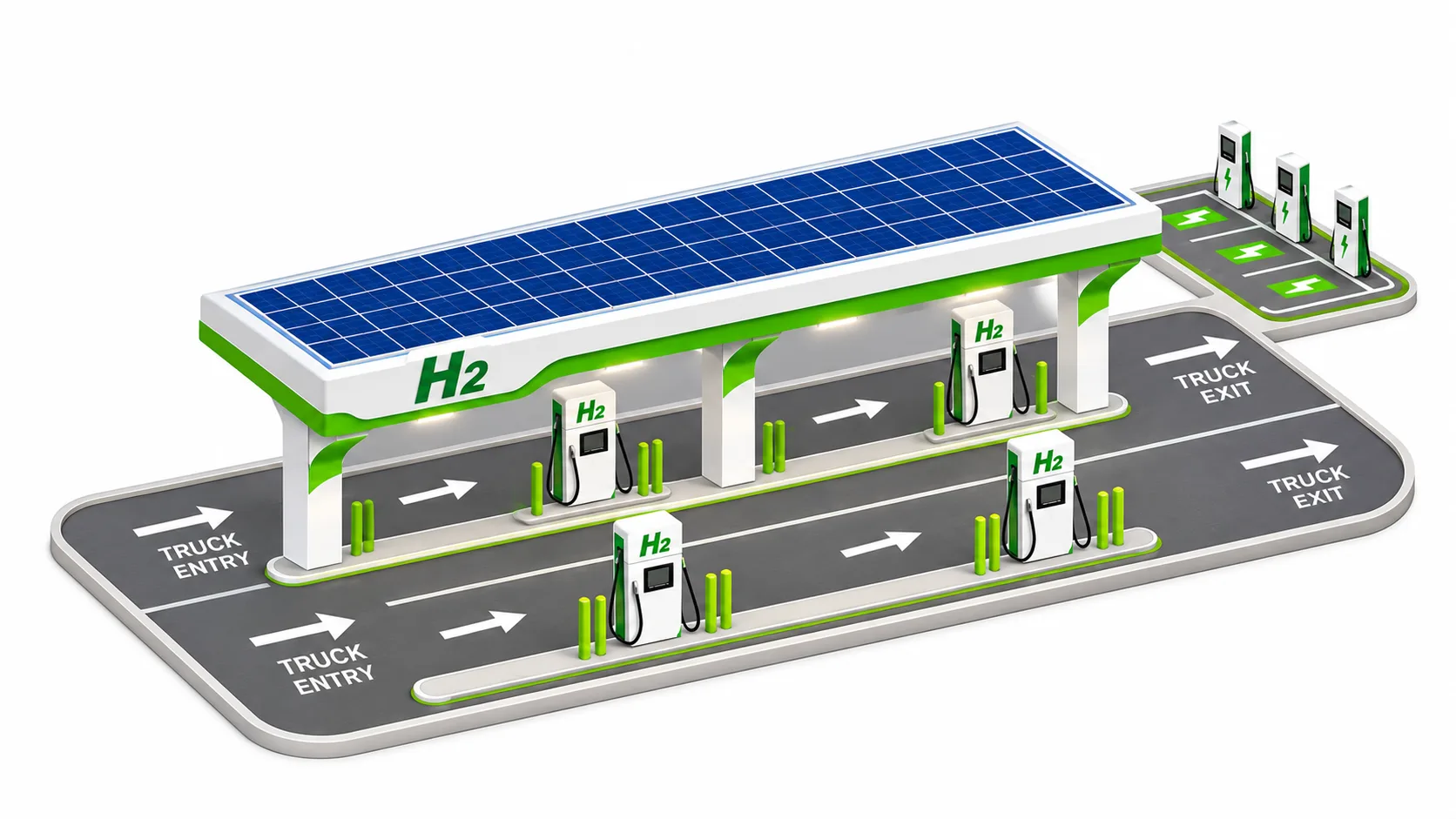
✓Pull-through dual-lane design for high-volume commercial traffic
✓Type IV composite high-pressure gaseous storage vessels
✓Solar PV & 300+ kWh on-site battery energy storage
✓Heavy-duty EV fast charging — 4 dual-port dispensers, 1,440 kW total capacity
✓Tube trailer filling bays — supports secondary distribution
✓Green hydrogen sourced directly from the La Rumorosa production facility in Baja California
Concept illustration of the Otay Mesa Hydrogen Fueling Station
Concept illustration — Otay Mesa Hydrogen Fueling Station. Dispensers operate at 350 bar (H35) for buses and 700 bar (H70) for Class 8 trucks.

If you are a fleet operator ready to move on green hydrogen supply in the Cali-Baja H₂ Corridor, we want to hear from you.

Let's talk →
GHB Vision

Cali-Baja H₂ Corridor

GHB is working to build a connected network of green hydrogen dispensing infrastructure — purpose-built for heavy-duty trucks — along the most active cross-border logistics route in North America. A green hydrogen dispenser corridor: fueling stations that deliver hydrogen produced from renewable energy, reducing emissions from the freight routes that need it most.

The Cali-Baja H₂ Corridor

The busiest commercial crossing between the United States and Mexico — and the natural anchor for the first green hydrogen fueling network dedicated to heavy-duty trucks in this region. Not diesel. Not compressed natural gas. Green hydrogen.

Otay Mesa is the busiest commercial land port of entry between the United States and Mexico. Thousands of trucks cross here every day — drayage operators running to the Ports of Long Beach and Los Angeles, logistics companies on cross-border routes, and the fleets of manufacturers and maquiladoras operating in Baja California. That freight volume is not going away. It is growing.

Fleet operators with hydrogen-powered trucks are ready to run this corridor. The trucks exist. The mandates are coming. But a hydrogen truck without a place to fuel is a truck that cannot commit to a route. The question that stops operators every time is the same: where do I fuel?

GHB's answer is to build the network, station by station. A green hydrogen dispensing station at Otay Mesa gives cross-border operators a confirmed fueling point at the border. A second station at Calexico opens the I-8 corridor. Each station added to the route is one more reason a fleet operator can say: I can run this route on green hydrogen. GHB supplies each station from its own production facility in Baja California — green hydrogen produced from renewable energy, delivered exclusively along the Cali-Baja H₂ Corridor.

Otay Mesa — first dispensing point
Port of Los Angeles / Long Beach — drayage hub
Port of San Diego — zero-emission cargo plan underway
San Diego — regional return corridor
Los Angeles Long Beach San Diego Proposed H₂ Dispensing Station · Otay Mesa, CA Border Crossing La Rumorosa H₂ Facility Mexicali Proposed H₂ Dispensing Station · Calexico, CA Phase 2 Ensenada H₂ Supply: La Rumorosa → Otay Mesa Truck Corridor: Otay ↔ SD ↔ LA Mexicali/Calexico → Los Angeles (I-8) US / Mexico Border H₂ Facility Proposed H₂ Dispensing Station
Green hydrogen produced at La Rumorosa, Baja California will travel ~60 miles to the Otay Mesa dispensing station just north of the border. Trucks will fuel there and run the full San Diego–Los Angeles corridor on one tank.
Why this corridor matters

Otay Mesa alone recorded over 1 million commercial truck crossings in 2023 — making it the second-busiest commercial land port on the entire U.S.–Mexico border. Add Calexico and the number exceeds 1.4 million. That freight volume is not going away. What is going to change — over the short, medium, and long term — is what powers the trucks that move it. GHB is building the infrastructure now so that when that transition comes, this corridor is ready. Source: U.S. Bureau of Transportation Statistics, Border Crossing Data, 2024.

Tangible benefits
Federal infrastructure alignment
In August 2024, Caltrans received $102 million in federal funds to build out the West Coast zero-emission truck corridor along I-5 and key freight routes — explicitly including hydrogen fueling stations. The Cali-Baja H₂ Corridor connects directly to that spine. Source: Caltrans, August 2024.
Regional economic weight
San Diego and Imperial Counties export $34.5 billion in goods annually — nearly all of it to Mexico. This binational supply chain supports roughly 95,000 jobs in sectors like aerospace, medical devices, and logistics. Infrastructure that keeps this freight moving cleanly is a regional economic priority, not just an environmental one. Source: World Trade Center San Diego / San Diego Regional EDC, 2025.
Strategic benefits
Regional energy independence
Green hydrogen produced in Baja California from local wind and solar — not imported fossil fuel — means freight energy that cannot be disrupted by global supply chain shocks, price spikes, or geopolitical events.
Regulatory runway for fleet operators
California has the strictest zero-emission truck mandates in the United States — and those mandates apply to commercial vehicles crossing into and out of this corridor. The direction is clear, even as specific timelines have shifted. A fleet operator that moves early — when routes are locked in and fueling networks are still being built — is not chasing compliance. They are defining the route. Source: California Air Resources Board, Advanced Clean Trucks regulation.
Cross-border cooperation model
The governors of California, Oregon, and Washington committed to building a shared hydrogen fueling network along the West Coast. A fueling corridor that starts at the U.S.–Mexico border is the southern anchor of that network — and a model for the broader binational region. Source: West Coast ZEV Network MOU, 2023.
First-mover position
The first hydrogen fueling station serving the Cali-Baja H₂ Corridor will set the terms for what comes next — pricing benchmarks, supply contracts, infrastructure standards, and the relationship between Mexico-sourced green hydrogen and U.S. fleet operators.
Interested in the corridor?

If you are a fleet operator, logistics company, port authority, or energy partner who wants to know more — reach out directly.

Let's talk →

"Hydrogen-powered trucks are not yet running in large numbers on this corridor. We know that. But diesel prices at record highs, combined with zero-emission mandates working their way through the freight industry, means the direction is clear. We are not building for today's fleet. We are building for the fleet that is coming — one truck, one route, one operator at a time."

— Miguel A. Vildosola, Co-Founder & CEO, Green Hydrogen Baja
Industries & Applications

The market is taking shape in Southern California.
We are building the supply chain it will need.

Hydrogen fuel cell trucks are on California roads today. Dispensers are coming online at the Port of Long Beach, in the LA basin, and along the I-5 corridor. The market is still early — but it is real, and it is growing. What these operators need is a supplier they can count on: contracted, scheduled deliveries of green hydrogen at competitive prices. That is what Green Hydrogen Baja is being built to provide, with first deliveries targeted for Q2 2028.

Heavy-Duty Mobility & Transportation
Our primary market — today and through 2030
Class 8 Fuel Cell Trucks

Hydrogen fuel cell Class 8 trucks are real and hauling freight in California today. Thirty Hyundai XCIENT tractors are pulling containers out of the Port of Oakland — the largest hydrogen truck deployment in the country. Toyota, Kenworth, and other manufacturers have additional units in service across Southern California. The technology works. The vehicles are on the road.

The bottleneck is distribution. The Oakland fleet is tethered to a single purpose-built fueling station. Outside that corridor, the hydrogen supply map goes blank. Fleet operators running drayage and regional freight in Southern California face the same problem: the trucks exist, but a reliable, scheduled supply of green hydrogen at competitive prices does not. That gap is exactly what Green Hydrogen Baja is built to close — producing green hydrogen at our plant in Baja California and delivering it at prices that make the model work.

The trucks are on the road. The distribution network is not — yet.

GHB's model: produce green hydrogen from renewable energy in Baja California, deliver it on a contracted schedule to fleet operators and dispenser companies already operating in Southern California. Competitive pricing. Certified green. No gaps in the map. Source: iDispatchHub, "Hydrogen Class 8 Trucks and Where They Stand in 2026," August 2026.

Transit & Coach Buses

Transit agencies across Southern California have been among the earliest adopters of hydrogen fuel cell technology. SunLine Transit Agency in the Coachella Valley has been operating hydrogen buses since 2000 — one of the longest-running programs in the country. NCTD (North County Transit District) operates hydrogen buses in San Diego County. These agencies fuel on a fixed daily schedule and require a supplier that can commit to consistent, predictable deliveries. A single hydrogen bus consumes roughly 20–40 kg of H₂ per day. A fleet of 20 buses requires a dedicated supply contract — the kind of long-term agreement GHB is designed to serve.

Transit agencies need certainty, not spot-market hydrogen.

GHB's model — scheduled tube trailer deliveries on a contracted basis — matches exactly how transit agencies need to plan their fuel supply. We are building supply capacity with these customers in mind.

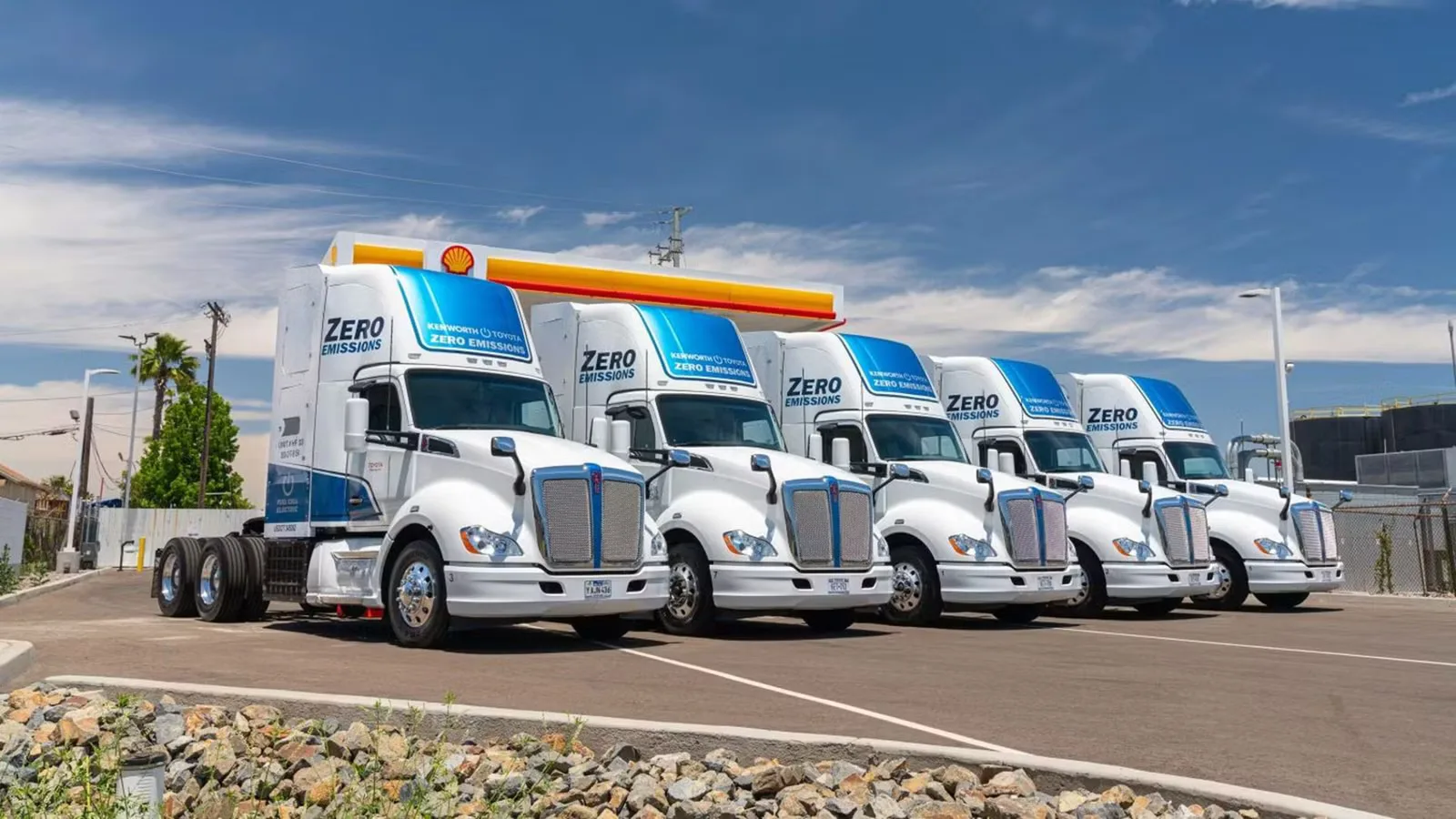
Zero-emission Class 8 fuel cell electric truck on highway
Zero-emission Class 8 fuel cell electric truck. GHB is being built to supply compressed green hydrogen to heavy-duty FCEV fleets operating in Southern California.
Drayage & Port Operations

The ports of Long Beach and Los Angeles — the busiest cargo complex in the Western Hemisphere — are where the first wave of hydrogen drayage trucks is operating. Private fleet operators and independent owner-operators running cross-border and regional freight through Otay Mesa face the same pressure to move toward zero-emission. These are our direct customers: the operators who already need hydrogen delivered to their fueling station, and the dispenser companies being built to serve them.

Our route through Otay Mesa puts us exactly where these operators are.

We are not waiting for the market to mature. We are positioning to serve the operators who are already running hydrogen trucks in Southern California today.

Industrial & Energy Applications
Future

As production capacity grows, additional markets open — industrial process gas, backup power for data centers and critical facilities, blending into natural gas infrastructure, and power generation through hydrogen-capable gas turbines. Green hydrogen is not only a transportation fuel: it is a versatile energy carrier that can replace fossil fuels across the industrial economy.

This is already happening. In November 2026, RWE and Kawasaki began trial operations of Europe's largest hydrogen-compatible gas turbine — a 34 MW unit in Lingen, Germany, capable of running on 100% hydrogen and powered by on-site renewable electrolysis. It is an early proof point for what becomes possible at scale: green hydrogen fueling combined-cycle power plants with zero carbon emissions. Source: RWE / Kawasaki, November 2026.

Mobility first. Scale second.

Our current focus is heavy-duty transportation in Southern California. Expansion into adjacent markets — including industrial and power generation applications — will follow as the platform matures.

Hydrogen dispensing — the green molecule is the problem everyone is about to have.

Operators across California are investing in hydrogen dispensers and refueling infrastructure. The hardware is the easy part. The harder question — one that is becoming a compliance and funding issue, not just a preference — is where the hydrogen comes from.

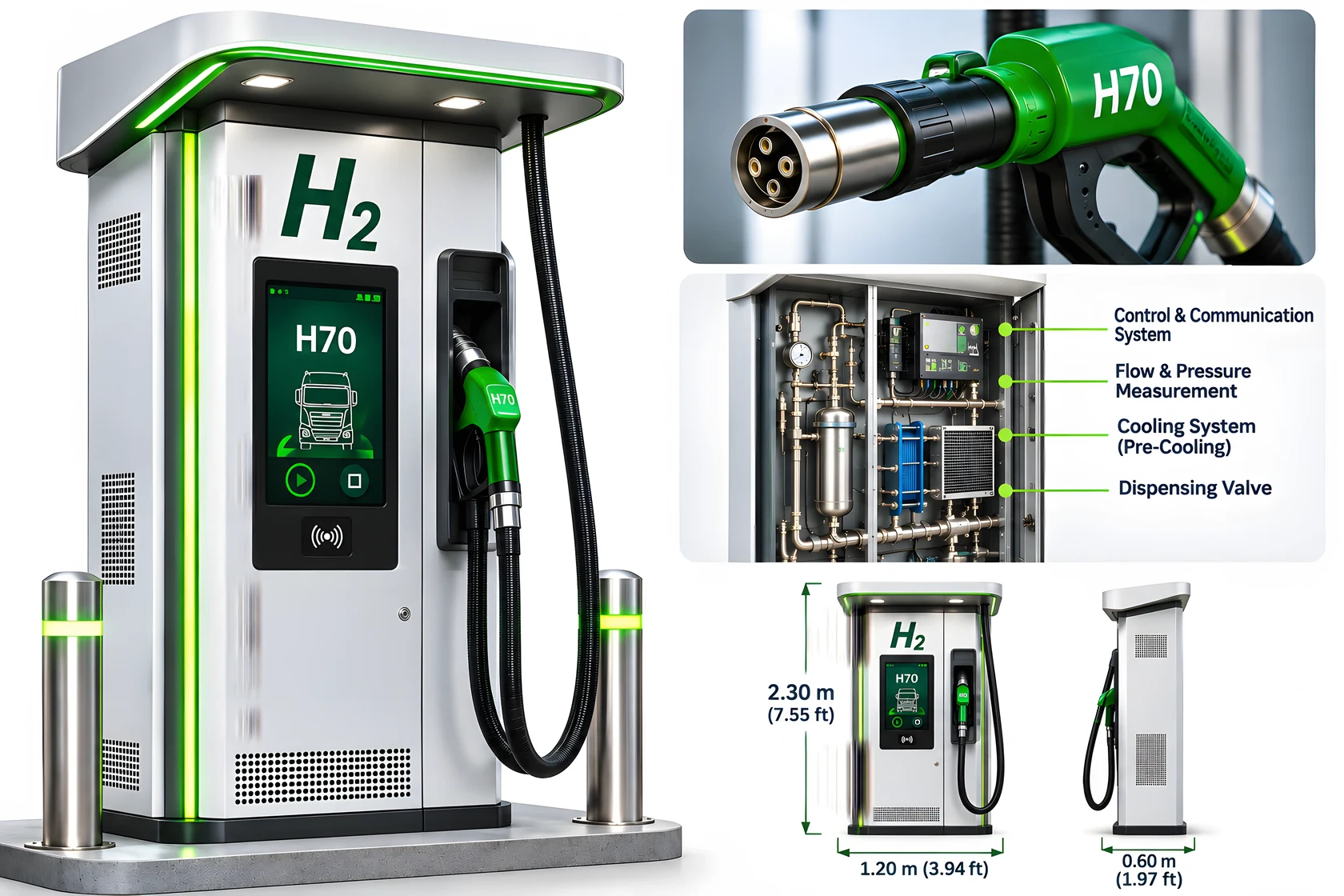
H70 green hydrogen dispensing unit with nozzle, internal components and dimensions
Concept illustration — H70 hydrogen dispensing unit. GHB's station will dispense green hydrogen at 350 bar (H35) for buses and 700 bar (H70) for Class 8 trucks.
The fueling infrastructure gap

Hydrogen fuel cell trucks are commercially available today. Fleet operators running cross-border and regional routes are under regulatory and market pressure to transition to zero-emission. The trucks exist. The economics are improving.

What is missing is the fueling infrastructure at the right location — a high-capacity, dual-protocol station where the trucks already operate.

GHB's Otay Mesa station is designed to close that gap — dispensing green hydrogen at 350 bar (H35) for buses and 700 bar (H70) for Class 8 trucks, supplied directly from production in Baja California.

Hydrogen dispensing infrastructure coming online in Southern California:
Long Beach — near the Port

Multi-use hydrogen station near the Port of Long Beach — serving transit buses at 350 bar (H35) and acting as a secondary distribution hub for onward tube trailer supply. The Port launched a $10M Hydrogen Fuel Grant Program in December 2025 and issued an active RFP for station development and operation. Source: Port of Long Beach, December 2025.

Santa Fe Springs — LA County, Highway 5

On-site hydrogen refueling station at a commercial truck dealership — 700 bar (H70) dispensing, capacity for up to 30 Class 8 trucks per day. Operational since September 2024.

The delivery format: Heavy-duty FCEV dispensers operate at 350 bar (H35) for buses and 700 bar (H70) for Class 8 trucks, per SAE J2601. Hydrogen arrives at these stations compressed in tube trailers — exactly how GHB will deliver it.

Where is the green hydrogen coming from?

Fleet operators and dispenser developers choosing hydrogen today are doing so for real reasons — zero tailpipe emissions, operational efficiency, and a cleaner supply chain. The question that follows is straightforward: is the hydrogen actually green? Produced from renewable energy, traceable from source to delivery, and documented? Green Hydrogen Baja is being built to answer that question with a clear yes — 100% green hydrogen, produced from wind and solar in Baja California, delivered to your facility in Southern California. First deliveries targeted for Q2 2028.

The question every dispenser operator will face:

"Your station is built. Your trucks are ready. But the hydrogen you're buying — is it green? Can you prove it? Does it qualify for state funding and incentives?"

California's clean transportation programs — including CEC's HIPO and CARB's truck incentive programs — are increasingly tied to renewable hydrogen requirements. The molecule needs to be traceable, certified, and green.

Green Hydrogen Baja will supply compressed green hydrogen produced from renewable energy — the molecule that qualifies, documented from production to delivery.

What we will provide to dispenser operators:
The molecule. Compressed green H₂ in Class 8 Jumbo Tube Trailers, delivered to your site on a contracted schedule.
The documentation. Chain-of-custody records from production to delivery — traceable, verifiable, green.
One supplier. No intermediaries. Direct relationship between our operations and yours.
Grant-ready supply. Green hydrogen from a certified renewable source — the input your funding applications will require.
Staying ahead of hydrogen policy — on both sides of the border

The hydrogen regulatory landscape is evolving rapidly — in California through CARB, the CEC, and federal programs; in Mexico through CRE, SENER, and emerging green hydrogen policy. For a company crossing both jurisdictions, being ahead of these changes is a direct business advantage: it shapes our compliance roadmap, informs our supply agreements, and allows us to advise our customers on funding programs and incentives tied to green hydrogen certification.

Green Hydrogen Baja participates in the hydrogen policy and industry conversation on both sides of the border — through the California Hydrogen Business Council (US), the California Air Resources Board (CARB), and the Asociación Mexicana de Hidrógeno y Transformación Energética (México).

US side: Track California incentive programs (CEC HIPO, CARB), federal DOE funding rounds, and green hydrogen certification requirements that affect our buyers' grant applications.
Mexico side: Monitor CRE export framework, SENER energy policy, and bilateral trade regulations that govern how our hydrogen crosses the border.
About GHB

Green hydrogen supplier in development for the Cali-Baja region.

Green Hydrogen Baja is an industrial gas company being built in the Cali-Baja cross-border region. Our product is compressed green hydrogen — produced from renewable energy in Baja California and delivered directly to your facility in Southern California. First deliveries are targeted for Q2 2028.

Green Hydrogen Baja is being built to operate the same way traditional industrial gas suppliers do — with reliable supply, scheduled deliveries, and direct customer service — but our sole product will be green hydrogen, H2.

Mission

To make green hydrogen available to industry and transportation in the Cali-Baja region — reliably, at scale, and at competitive cost.

Vision

To become the leading green hydrogen supplier across the U.S.–Mexico border, connecting renewable energy production in Baja California with growing industrial demand in Southern California — and to anchor the first green hydrogen dispenser corridor along the Cali-Baja H₂ Corridor.

Values

Reliability — We deliver on our commitments, every time.
Sustainability — Our product exists to reduce emissions, not just describe them.
Transparency — We tell our customers exactly what they're getting and where it comes from.

Our supply

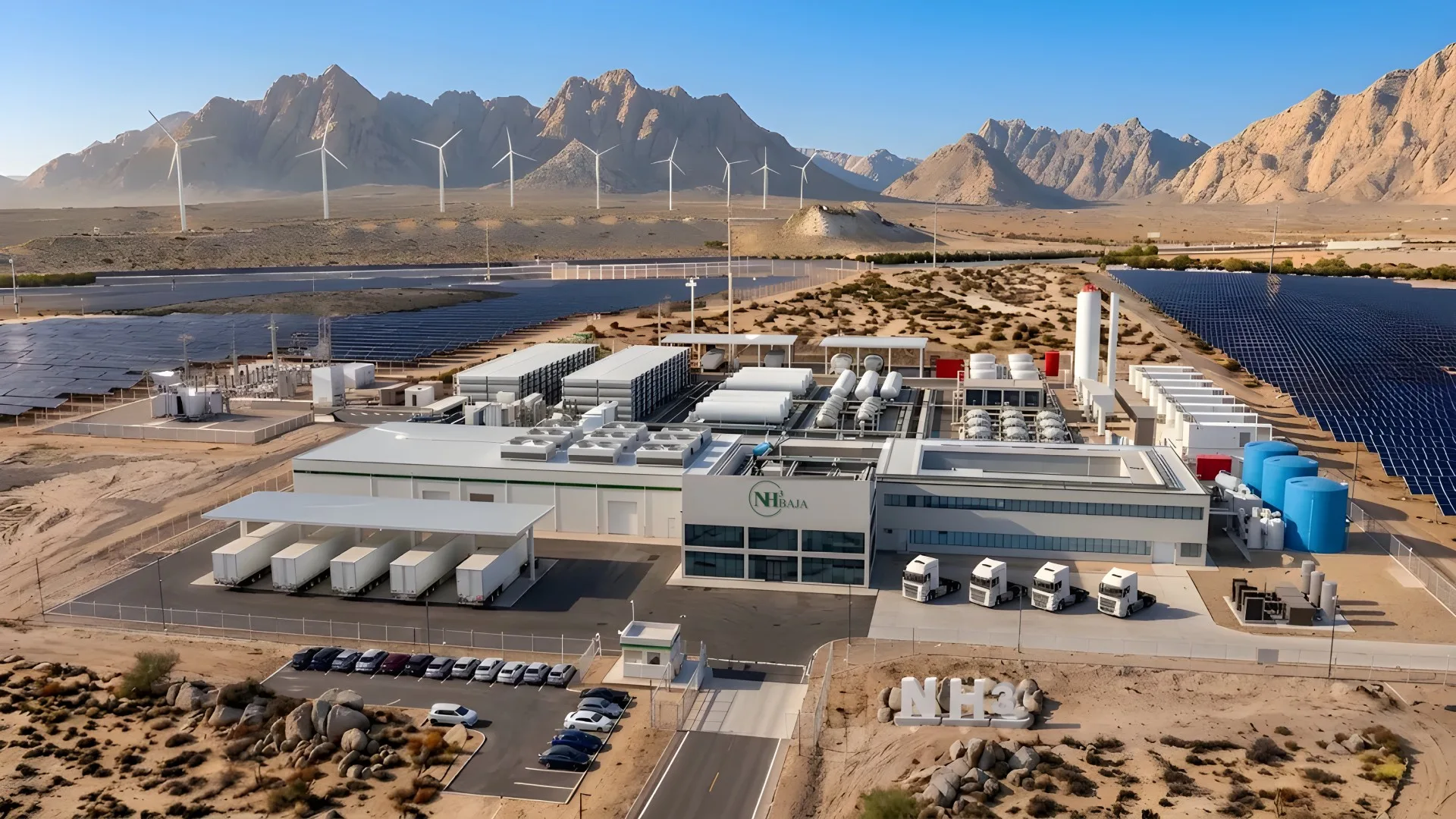
Green Hydrogen Baja is developing a green hydrogen production facility in La Rumorosa, Baja California, México — one of the best locations on the continent for renewable energy production. Hydrogen is produced using wind and solar power — with no carbon emissions at the point of production.

Green Hydrogen Baja production facility concept — La Rumorosa, Baja California
Concept illustration — Green Hydrogen Baja production facility at La Rumorosa, Baja California. Wind and solar powered, with on-site compression and tube trailer loading bays.
Location
La Rumorosa
Baja California, México
Distance to border
~60 miles
Otay Mesa Port of Entry
Avg. wind speed
> 7 m/s
Among the highest in Baja California
Energy source
Wind + Solar
Zero carbon at point of production
The Cali-Baja region

The Cali-Baja Mega-Region covers San Diego County, Imperial County, and the State of Baja California — one of the most active cross-border economic corridors on the planet. San Diego and Imperial County alone export $34.5 billion in goods annually, and nearly 97% of those exports go to Mexico. The region supports roughly 95,000 jobs in aerospace, medical devices, electronics, and clean energy.

More than $2.3 billion in goods cross the U.S.–Mexico border every day. Baja California is moving up the value chain — from electronics assembly to higher-value manufacturing in medical devices, transportation equipment, and now clean energy. The industrial fleets that move those goods across this corridor are the first market for green hydrogen in the region.

GHB is positioned at the center: producing in Baja California, delivering in Southern California. GHB is positioned to be among the first green hydrogen producers to serve this crossing.

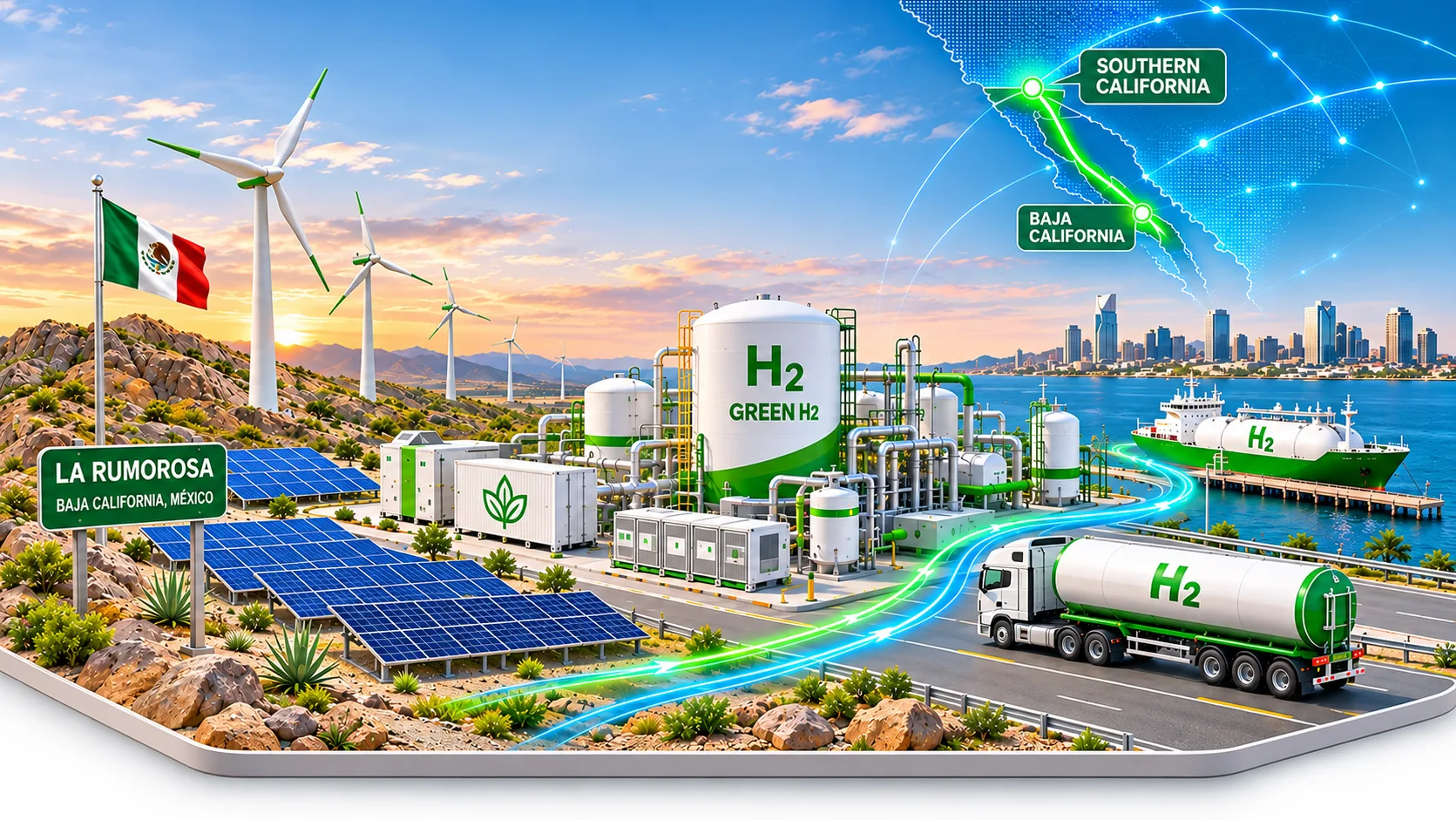
La Rumorosa, Baja California to Southern California — green hydrogen corridor concept
Concept illustration — Green hydrogen produced at La Rumorosa, Baja California, transported via tube trailer across the Otay Mesa Port of Entry and delivered to customers in Southern California.
CERTIFIED GREEN HYDROGEN

Not just green by name.
Certified by an independent body.

Any producer can call their hydrogen green. GHB will certify every kilogram — through independent, accredited bodies — to prove that it was produced from renewable energy and meets verifiable low-carbon standards. That certification is built into our production model from day one, not added later.

OUR CERTIFICATION
Guarantee of Origin

GHB will certify every kilogram of hydrogen through Bureau Veritas — an internationally accredited third-party body that operates in both Mexico and the United States. This certification will issue a Guarantee of Origin (GO): an audited, documented record proving the hydrogen was produced from renewable energy.

This will not be a marketing label. It will be an independent verification of our production process — from renewable energy source, through electrolysis, to delivery. Every batch, documented.

Certification is not an add-on

It is part of GHB's production design from day one. Our renewable energy sourcing, electrolysis process, and delivery chain will be structured to meet audit requirements before first delivery.

FOR OUR CUSTOMERS
Why It Matters to You

Fleet operators, dispenser companies, port authorities, and industrial buyers are increasingly required to demonstrate the origin of the energy they consume. A Guarantee of Origin from an accredited body is the document that answers that question — to their regulators, their stakeholders, and their own customers.

When a buyer asks "how do you prove this hydrogen is green?" — the answer will be a document issued by an independent, internationally recognized body. Not a claim from us. Proof from a third party.

What you will receive with every delivery

Certified green hydrogen with documentation. Not a promise — a verified record from an independent body that will travel with every kilogram we deliver.

RFNBO — Renewable Fuels of Non-Biological Origin
Optional upon client request

The European Union's certification standard for hydrogen used in transportation and industrial applications. RFNBO designation confirms that hydrogen was produced exclusively from renewable electricity sources and meets the EU's strict additionality, temporal correlation, and geographical correlation requirements. For GHB clients operating in or supplying European markets, RFNBO certification provides direct regulatory compliance and access to EU clean hydrogen markets.

When a customer asks if our hydrogen is really green — the answer will be documented.

GHB is designed to serve customers who need verifiable green hydrogen — institutional buyers, fleets operating under California's clean fuel standards, and operators who must demonstrate environmental compliance to their own stakeholders. Our certification structure will be built to meet that standard.

Reserve your capacity for Q2 2028.

Pre-registrations and letters of intent are now open. Follow the three steps below to secure your production slot.

1
Register Your Interest
Fill out the form with your location, delivery pressure, and estimated volume.
2
Letter of Intent (LOI)
Structure a non-binding LOI to confirm your requirements and reserve your place in the delivery schedule.
3
Pre-Order Agreement + Deposit
Convert your LOI into a binding pre-order agreement. A deposit secures your production slot. Deliveries begin Q2 2028.

Fields marked * are required. This is a pre-registration for capacity beginning Q2 2028.

Our offices

Green Hydrogen Baja operates across the Cali-Baja H₂ Corridor, with offices in Mexico, the United States, and Europe.

Production & manufacturing
Romulo O'Farril 971, Col. Centro Cívico
Mexicali, B.C. 21000, México
Mexico headquarters
Ángel Urraza 520, Col. del Valle
Benito Juárez, CDMX 03100, México
U.S. sales (California)
Green Hydrogen Baja, LLC
2127 Olympic Pkwy, STE 1006-166
Chula Vista, CA 91915
International POC
Bahnhofstrasse 57
6403 Küssnacht am Rigi, Switzerland
Office hours
Monday – Friday  ·  9:00 am – 5:00 pm Saturday  ·  9:00 am – 12:00 pm Sunday  ·  Closed
+1 (619) 947-1620 (USA) +52 55 8034 4449 (MX) info@greenh2baja.com WhatsApp